Attendance Tracking for Hybrid Team: A Practical Guide
Hybrid teams rarely fail because of performance
They fail when leaders lose visibility into who is available, when work actually happens, and where operational gaps quietly form
Table of Contents :
- Introduction
- What Is Attendance Visibility in Hybrid Work?
- Why Hybrid Teams Struggle Without It
- Key Challenges of Inadequate Attendance Data
- How Attendance Visibility Improves Performance
- Best Practices for Hybrid Attendance Management
- AMS Tools and Solutions
- Conclusion
- Call to Action
- FAQs
Hybrid work has transformed how organizations operate. Employees split their time between remote locations and office spaces, resulting in flexibility, autonomy, and higher job satisfaction. But with this flexibility comes a complex challenge:
leaders often lose visibility into who is working, when, and how consistently.
In many cases, hybrid teams appear productive tasks are completed, messages are answered, and meetings are scheduled. Yet, hidden gaps in operational visibility eventually lead to inefficiencies, burnout, misaligned priorities, and compliance risks.
This article explains why attendance visibility matters in hybrid environments and how modern attendance management solutions can help leaders navigate these challenges effectively.
What Is Attendance Visibility in Hybrid Work?
In traditional office environments, managers inherently saw who showed up and when. In hybrid settings, attendance isn’t just about physical presence — it’s about understanding workforce availability across locations and schedules.
Attendance visibility refers to the ability to see:
- Who is actively engaged during work hours
- When teams or individuals are available
- Attendance patterns over time
- Potential gaps or conflicts before they become issues
This visibility becomes a diagnostic lens — helping leaders determine not just presence, but capacity, workload balance, and performance readiness.
Why Hybrid Teams Struggle Without It
Many hybrid teams fail not because employees are unproductive, but because leaders lack clarity about work patterns. When managers rely on assumptions rather than data, the result is unpredictability.
For example:
- A remote team might appear responsive, but leaders can’t tell if coverage is consistent
- An office team might be physically present but unavailable during peak times
- Teams may experience fatigue and burnout without clear visibility into workload distribution
Without attendance visibility, decision-making becomes reactive instead of proactive.
Key Challenges of Inadequate Attendance Data
Let’s explore the specific problems teams face when attendance data is missing or inaccurate.
🔹 Lack of Real-Time Awareness
Managers can’t track who’s online or available, which leads to delays in decisions and work handoffs.
🔹 Uneven Workload Distribution
Without insights into hours worked and activity patterns, some team members may get overloaded while others are underutilized.
🔹 Burnout and Fatigue
Teams may resent constant check-ins or vague expectations without structured visibility.
🔹 Compliance Risks
Data gaps can lead to inaccurate reporting for labor laws, contracts, or internal policies — especially across geographic jurisdictions.
How Attendance Visibility Improves Performance
When organizations implement effective attendance visibility, the impact is noticeable:
- Faster responses to staffing shortages
- Better prediction of workload spikes
- Enhanced coordination across distributed teams
- Stronger accountability and trust
- Improved operational discipline
Rather than guess, leaders can decide based on real data, giving teams both flexibility and structure.
Best Practices for Hybrid Attendance Management
Here are concrete steps organizations can take:
1️⃣ Standardize Attendance Tracking
Use a unified system that captures remote and on-site hours consistently.
2️⃣ Focus on Patterns, Not Presence
Managers should analyze trends over time — not minute-by-minute activity.
3️⃣ Provide Clear Expectations
Communicate policies for core hours and availability windows.
4️⃣ Use Analytics to Forecast Workload
Attendance data can show where shifts or capacity gaps may occur before they impact outcomes.
5️⃣ Build Feedback Loops
Regular team check-ins help refine attendance policies and visibility tools.
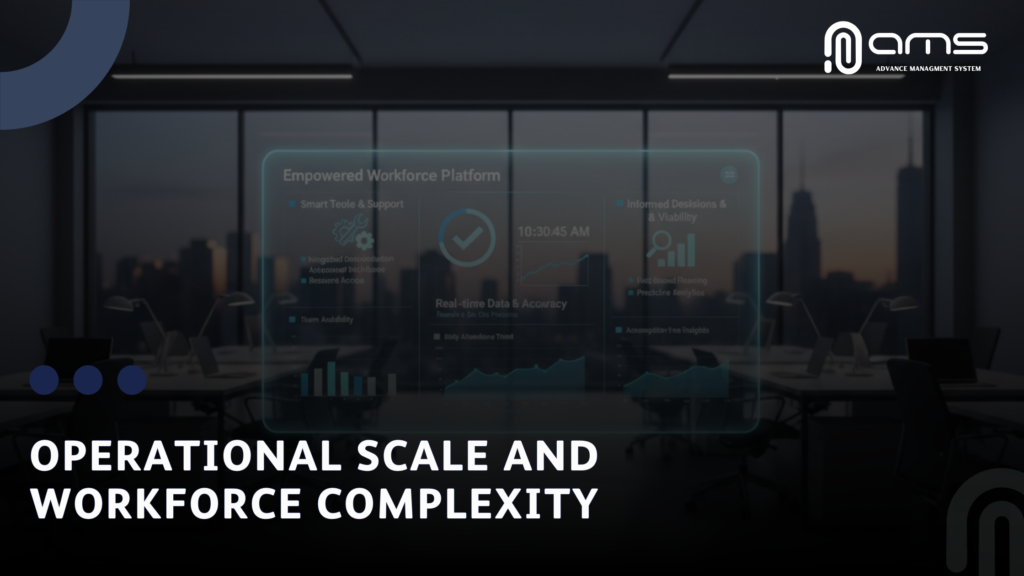
AMS Advance management system
Modern Attendance Management Systems (AMS) designed to tackle hybrid visibility challenges.
These tools help organizations:
- Collect attendance data in real time
- Generate insights about workload balance
- Predict staffing needs before gaps occur
- Align team performance with operational goals
For example, your organization may already use tools that capture activity — but the difference lies in how that data is visualized, contextualized, and acted upon. An AMS brings clarity without micromanagement.
Learn how operational clarity becomes strategic advantage in hybrid teams.
Read below:
For operational insights that span industries, check our Hospitality attendance article → Attendance Management in Hospitality
HERE : https://linkly.link/2Zsgo
At the END :
Hybrid work offers flexibility and autonomy, but those benefits can only be fully realized with attendance visibility.
Visibility is not about surveillance — it’s about insight:
- Insight leaders can act on
- Insight that builds trust
- Insight that scales with growth
When leaders can see what’s happening within their teams, they can guide them toward higher performance with confidence.
For enterprise discipline and real-time visibility, see our SaaS solutions overview :
If you’re ready to gain real-time clarity into hybrid team attendance and make better operational decisions:
Book a demo with our Attendance Management System and see firsthand how visibility supports performance not restricts flexibility
first step just click here : https://linkly.link/2SD0C
FAQ
Q1: Isn’t hybrid attendance visibility just tracking login times?
A: No , it’s much more. True visibility captures patterns, availability windows, and trends that help leaders make better decisions, not just timestamps.
Q2: Won’t tracking attendance in hybrid work reduce trust?
A: Not if it’s done right. The goal is operational insight, not surveillance. When teams understand expectations, visibility builds accountability ,not distrust.
Q3: How does AMS help with workforce planning?
A: AMS tools aggregate attendance data, highlight capacity gaps, and provide analytics that forecast staffing needs before issues arise.